SUPPORTED BY COMPARATIVE

CLINICAL EVIDENCE

Yesafili™ has achieved all benchmarks for biosimilarity in efficacy and safety
to the reference aflibercept.1-3

Totality of evidence for YESAFILI is based on similarity in analytical and clinical data,
with extrapolation to available Eylea® indications.1-3

EFFICACY

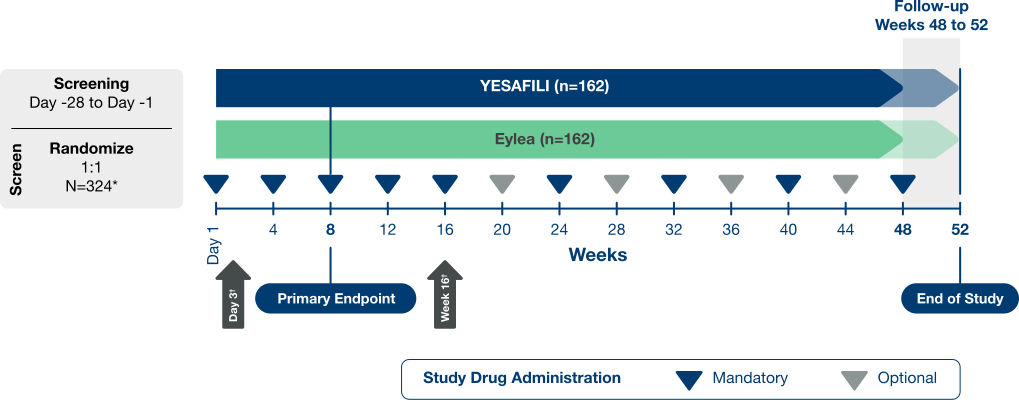
A Phase 3, multicenter, randomized, double-blind clinical study comparing the efficacy and safety of YESAFILI and Eylea in 355 adults with diabetic macular edema (DME) treated up to 52 weeks.3
Phase 3 study design: 324 DME patients randomised 1:1 to Yesafili or Eylea, primary endpoint Week 8, end of study Week 52.

*In addition to the 324 patients, 1 extra patient will be randomized for each patient who meets any of the prespecified criteria related to missed/delayed dosing or study assessments because of the COVID-19 pandemic. The maximum number of these extra patients will be 70.

Additional visits for patients participating in the pharmacokinetic substudy.

Primary Endpoint: Demonstrated BCVA Equivalence

YESAFILI demonstrated clinical equivalence to Eylea based on the mean change in BCVA from baseline to Week 8.3,4

Secondary Endpoint: Sustained BCVA Equivalence

There were no statistically significant differences in BCVA mean change between the 2 treatment groups from baseline to Week 52.3,4
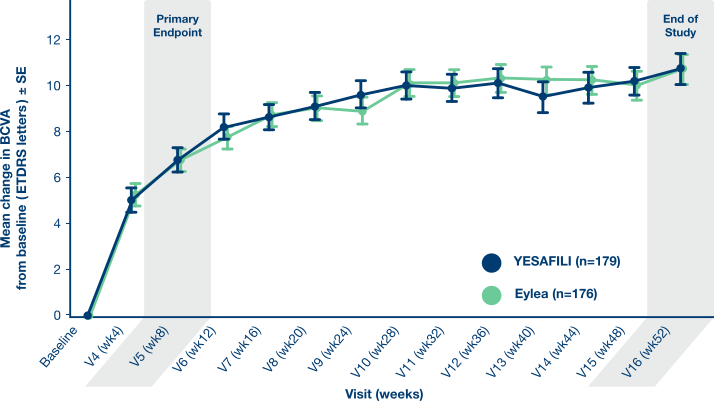
Mean Change in BCVA Over Time (ETDRS letter)3,4
Yesafili and Eylea showed equivalent mean BCVA improvement from baseline through Week 52 with closely overlapping results

Secondary Endpoint: Similar Visual Improvement

There were no statistically significant differences in the proportion of patients who gained a prespecified number of letters between the 2 treatment groups from baseline to Week 52.3,4
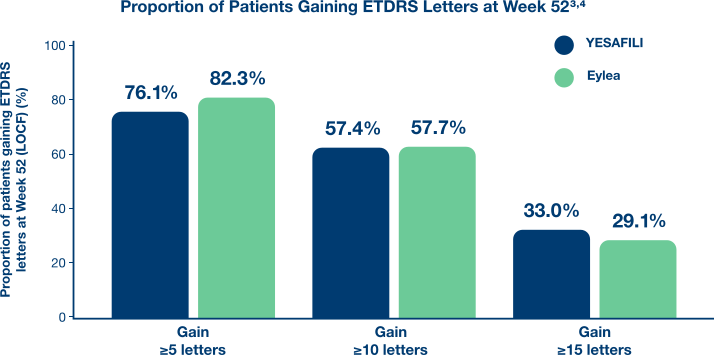
Bar chart showing similar proportions of patients gaining ≥5, ≥10, and ≥15 ETDRS letters at Week 52 for Yesafili vs Eylea

BCVA=best corrected visual acuity; ETDRS=Early Treatment Diabetic Retinopathy Study; LOCF=last observation carried forward; V=visit; wk=week.

Secondary Endpoint: Demonstrated CST (central subfield thickness) Equivalence

YESAFILI met the key secondary endpoint of clinical equivalence to Eylea based on the mean change in CRT, measured as CST, from baseline to Week 8.3,4

Secondary Endpoint: Sustained CST Improvements

There were no statistically significant differences in mean change in CRT, measured as CST, between the 2 treatment groups from baseline to Week 52.3,4
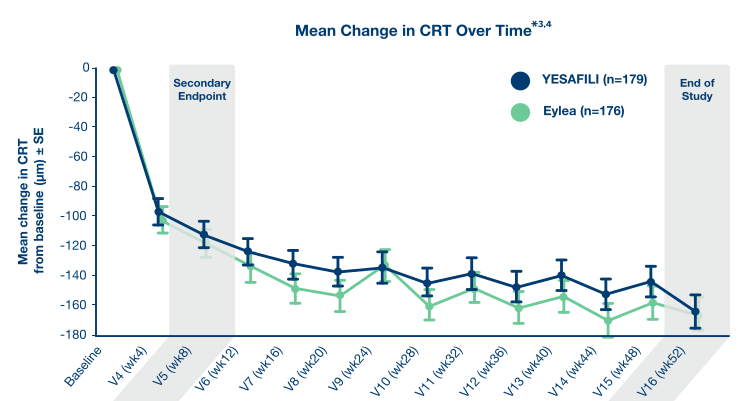
Yesafili and Eylea showed equivalent mean CRT reduction from baseline through Week 52 with similar trajectories

*Measured as central subfield thickness by an MMRM.

CRT=central retinal thickness; CST=central subfield thickness; MMRM=mixed model repeated measures; V=visit; wk=week.

SAFETY

Overall, YESAFILI and Eylea were well tolerated, and their safety profiles were similar with no significant safety concerns or events of endophthalmitis observed.3

OVERALL INCIDENCE OF TREATMENT-EMERGENT ADVERSE EVENTS (TEAEs)3

Demonstrated Comparable Safety

  • The incidence of ocular and nonocular TEAEs was similar between the YESAFILI and Eylea arms3
  • A total of 6 subjects discontinued treatment due to TEAEs: 3 (1.7%) each in the YESAFILI and Eylea arms3
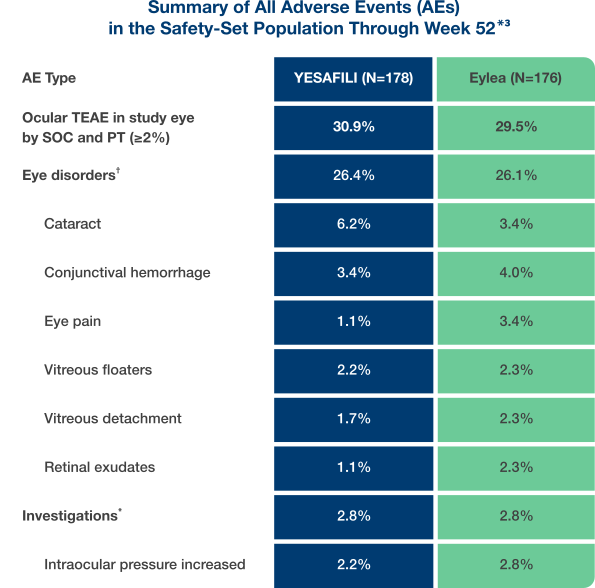
Comparable adverse event rates for Yesafili vs Eylea through Week 52: ocular TEAEs 30.9% vs 29.5%

SIMILAR IMMUNOGENICITY

  • There were no statistically significant differences in the overall proportion of ADA-positive patients between the 2 treatment groups from baseline to Week 523,4
  • Incidence of neutralizing antibodies was 0% in patients treated with YESAFILI and 0.6% in those treated with the reference biologic drug3,4
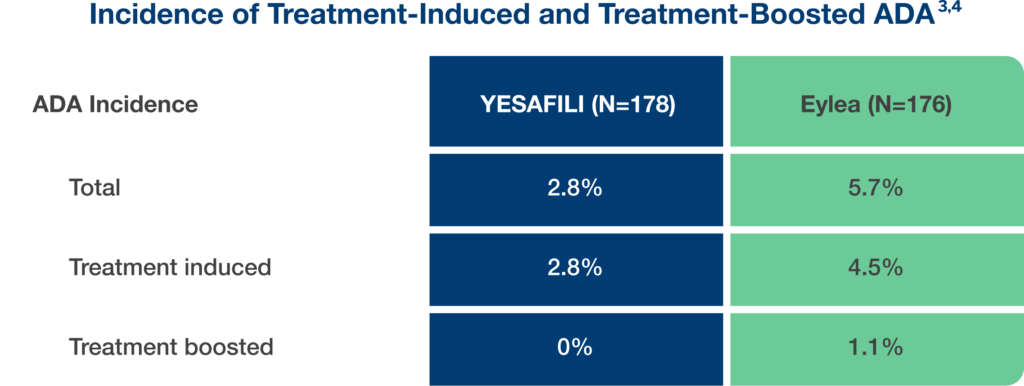
incidence-of-treatment

*For participants with multiple events of various severities or relationships, only the event with the highest severity or strongest relationship was counted.

One event of eye inflammation was noted in the Eylea arm, and no event was observed in the YESAFILI arm. No endophthalmitis was reported in either treatment arm.


ADA=antidrug antibody; PT=preferred term; SOC=system organ class.

REFERENCES

1. YESAFILI. Prescribing information. Biocon Biologics Inc; 2026. 2. US Food and Drug Administration. Biosimilars: review and approval. Last updated December 13, 2022. Accessed April 16, 2026. https://www.fda.gov/drugs/biosimilars/review-and-approval 3. Bressler SB, Barve A, Ganapathi PC, et al. Aflibercept biosimilar MYL-1701P vs reference aflibercept in diabetic macular edema: the INSIGHT randomized clinical trial. JAMA Ophthalmol. 2024;142(10):952-960. 4. Data on file. Biocon Biologics; 2026.

IMPORTANT SAFETY INFORMATION AND INDICATIONS

READ MORE +

SHOW LESS -

IMPORTANT SAFETY INFORMATION

CONTRAINDICATIONS

  • YESAFILI (aflibercept-jbvf) is contraindicated in patients with ocular or periocular infections, active intraocular inflammation, or known hypersensitivity to aflibercept or to any of the excipients in YESAFILI.

WARNINGS AND PRECAUTIONS

  • Intravitreal injections, including those with aflibercept products, have been associated with endophthalmitis and retinal detachments and, more rarely, retinal vasculitis with or without occlusion. Proper aseptic injection technique must always be used when administering YESAFILI. Patients and/or caregivers should be instructed to report any signs and/or symptoms suggestive of endophthalmitis, retinal detachment, or retinal vasculitis without delay and should be managed appropriately.
  • Acute increases in intraocular pressure have been seen within 60 minutes of intravitreal injection, including with aflibercept products. Sustained increases in intraocular pressure have also been reported after repeated intravitreal dosing with VEGF inhibitors. Intraocular pressure and the perfusion of the optic nerve head should be monitored and managed appropriately.
  • There is a potential risk of arterial thromboembolic events (ATEs) following intravitreal use of VEGF inhibitors, including aflibercept products. ATEs are defined as nonfatal stroke, nonfatal myocardial infarction, or vascular death (including deaths of unknown cause).
  • The incidence of reported thromboembolic events in wet AMD studies during the first year was 1.8% (32 out of 1824) in the combined group of patients treated with aflibercept compared with 1.5% (9 out of 595) in patients treated with ranibizumab; through 96 weeks, the incidence was 3.3% (60 out of 1824) in the aflibercept group compared with 3.2% (19 out of 595) in the ranibizumab group. The incidence in the DME studies from baseline to week 52 was 3.3% (19 out of 578) in the combined group of patients treated with aflibercept compared with 2.8% (8 out of 287) in the control group; from baseline to week 100, the incidence was 6.4% (37 out of 578) in the combined group of patients treated with aflibercept compared with 4.2% (12 out of 287) in the control group. There were no reported thromboembolic events in the patients treated with aflibercept in the first six months of the RVO studies.

ADVERSE REACTIONS

  • Serious adverse reactions related to the injection procedure have occurred in <0.1% of intravitreal injections with aflibercept including endophthalmitis and retinal detachment.
  • The most common adverse reactions (≥5%) reported in patients receiving aflibercept were conjunctival hemorrhage, eye pain, cataract, vitreous detachment, vitreous floaters, and intraocular pressure increased.
  • Patients may experience temporary visual disturbances after an intravitreal injection with YESAFILI and the associated eye examinations. Advise patients not to drive or use machinery until visual function has recovered sufficiently.
  • Patient may experience eye disorders such as retinal vasculitis and occlusive retinal vasculitis related to intravitreal injection with aflibercept.

INDICATIONS

YESAFILI is a vascular endothelial growth factor (VEGF) inhibitor indicated for the treatment of patients with:

  • Neovascular (Wet) Age-Related Macular Degeneration (AMD)
  • Macular Edema following Retinal Vein Occlusion (RVO)
  • Diabetic Macular Edema (DME)
  • Diabetic Retinopathy (DR)

IMPORTANT SAFETY INFORMATION AND INDICATIONS

IMPORTANT SAFETY INFORMATION

CONTRAINDICATIONS

  • YESAFILI (aflibercept-jbvf) is contraindicated in patients with ocular or periocular infections, active intraocular inflammation, or known hypersensitivity to aflibercept or to any of the excipients in YESAFILI.

WARNINGS AND PRECAUTIONS

  • Intravitreal injections, including those with aflibercept products, have been associated with endophthalmitis and retinal detachments and, more rarely, retinal vasculitis with or without occlusion. Proper aseptic injection technique must always be used when administering YESAFILI. Patients and/or caregivers should be instructed to report any signs and/or symptoms suggestive of endophthalmitis, retinal detachment, or retinal vasculitis without delay and should be managed appropriately.
  • Acute increases in intraocular pressure have been seen within 60 minutes of intravitreal injection, including with aflibercept products. Sustained increases in intraocular pressure have also been reported after repeated intravitreal dosing with VEGF inhibitors. Intraocular pressure and the perfusion of the optic nerve head should be monitored and managed appropriately.
  • There is a potential risk of arterial thromboembolic events (ATEs) following intravitreal use of VEGF inhibitors, including aflibercept products. ATEs are defined as nonfatal stroke, nonfatal myocardial infarction, or vascular death (including deaths of unknown cause).
  • The incidence of reported thromboembolic events in wet AMD studies during the first year was 1.8% (32 out of 1824) in the combined group of patients treated with aflibercept compared with 1.5% (9 out of 595) in patients treated with ranibizumab; through 96 weeks, the incidence was 3.3% (60 out of 1824) in the aflibercept group compared with 3.2% (19 out of 595) in the ranibizumab group. The incidence in the DME studies from baseline to week 52 was 3.3% (19 out of 578) in the combined group of patients treated with aflibercept compared with 2.8% (8 out of 287) in the control group; from baseline to week 100, the incidence was 6.4% (37 out of 578) in the combined group of patients treated with aflibercept compared with 4.2% (12 out of 287) in the control group. There were no reported thromboembolic events in the patients treated with aflibercept in the first six months of the RVO studies.

ADVERSE REACTIONS

  • Serious adverse reactions related to the injection procedure have occurred in <0.1% of intravitreal injections with aflibercept including endophthalmitis and retinal detachment.
  • The most common adverse reactions (≥5%) reported in patients receiving aflibercept were conjunctival hemorrhage, eye pain, cataract, vitreous detachment, vitreous floaters, and intraocular pressure increased.
  • Patients may experience temporary visual disturbances after an intravitreal injection with YESAFILI and the associated eye examinations. Advise patients not to drive or use machinery until visual function has recovered sufficiently.
  • Patient may experience eye disorders such as retinal vasculitis and occlusive retinal vasculitis related to intravitreal injection with aflibercept.

INDICATIONS

YESAFILI is a vascular endothelial growth factor (VEGF) inhibitor indicated for the treatment of patients with:

  • Neovascular (Wet) Age-Related Macular Degeneration (AMD)
  • Macular Edema following Retinal Vein Occlusion (RVO)
  • Diabetic Macular Edema (DME)
  • Diabetic Retinopathy (DR)
Scroll to Top

You are now departing from the Yesafili HCP website and redirected to the Biocon Biologics corporate website. Please be aware that the Biocon Biologics corporate website may contain information that varies from the content on the Yesafili HCP website. The website you are about to access is the corporate website located outside of the U.S.
U.S. regulations may not be applicable to the content on this corporate website.

You are now leaving Yesafili HCP, a Biocon Biologics website. The website you are about to access is not owned or controlled by Biocon Biologics Inc.

Biocon Biologics Inc. assumes no responsibility for and makes no warranties or representation of any kind as to the accuracy, currency, or completeness of any information contained in such third-party website, including any third-party social media or mobile application platform. Inclusion of any third-party link on this website does not imply an endorsement or recommendation by Biocon Biologics, and a link to this website from another website does not imply a relationship between Biocon Biologics and any third party. Your use of any such third-party site or platform is at your own risk and will be governed by such third party’s terms and policies (including its privacy policy). Biocon Biologics shall not be liable for any direct, indirect, consequential, incidental or punitive damages arising out of access to, use of, or inability to use such third-party website, or any errors or omissions in the content thereof.

INDICATIONS

YESAFILI is a vascular endothelial growth factor (VEGF) inhibitor indicated for the treatment of patients with:

    • Neovascular (Wet) Age-Related Macular Degeneration (AMD)
    • Macular Edema following Retinal Vein Occlusion (RVO)
    • Diabetic Macular Edema (DME)
    • Diabetic Retinopathy (DR)